Why Coffee Origin Impacts Flavor Complexity

Coffee origin is the single most powerful determinant of a coffee’s flavor complexity, shaping taste long before a roaster or barista touches the bean. The specialty coffee industry uses the term “terroir” to describe this influence, borrowing the concept from wine to capture how climate, altitude, soil, and topography combine to produce distinct chemical and sensory profiles. Why coffee origin impacts flavor complexity comes down to genetics, growing conditions, and processing choices that interact at the molecular level. An Ethiopian Yirgacheffe and a Colombian Huila are not just different coffees. They are fundamentally different chemical systems. Understanding that difference is what separates casual coffee drinking from genuine appreciation.
Why coffee origin impacts flavor complexity at the molecular level
Coffee origin shapes flavor by determining the chemical composition of the green bean before any heat is applied. Geographic origin causes measurable chemical differences in Coffea arabica beans, with American-grown beans showing the highest dry matter content and African beans exhibiting higher variability in water-soluble compounds. That variability in African beans translates directly to the wider, more unpredictable flavor range that makes Ethiopian and Kenyan coffees so prized among specialty enthusiasts.
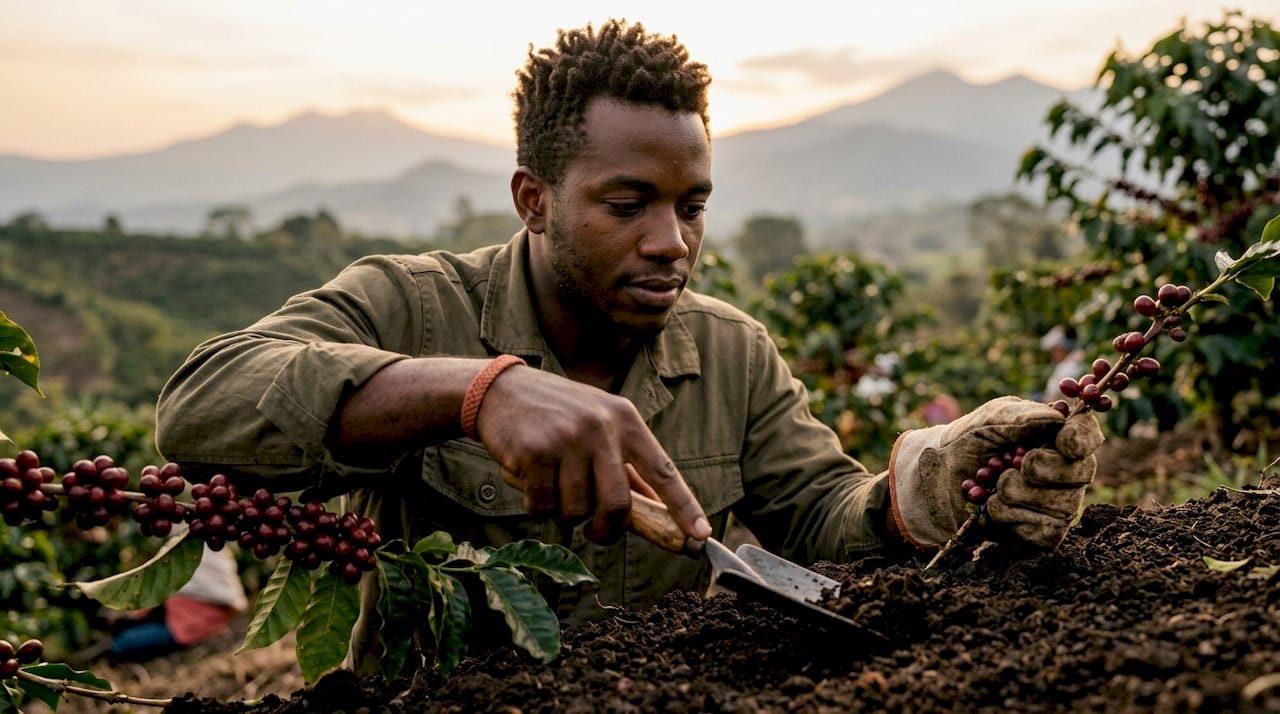
Trace elements absorbed from the soil act as chemical fingerprints. Beans grown in volcanic soils in Guatemala carry different mineral profiles than beans grown in the red clay soils of Brazil’s Cerrado. Those mineral differences influence antioxidant properties and flavor intensity in the cup. Flavor complexity emerges from synergistic and antagonistic interactions among these compounds, producing nuanced, origin-specific aromatic profiles that no single ingredient can replicate.
Genetics add another layer. Coffea arabica varieties like Gesha, Bourbon, and Typica each carry distinct genetic predispositions for certain flavor compounds. When a specific variety grows in a specific environment, the result is a flavor profile that cannot be reproduced elsewhere. That is why a Gesha from Panama’s Boquete region tastes different from a Gesha grown in Ethiopia, even though the variety is the same.
What components of terroir shape the coffee flavor profile?
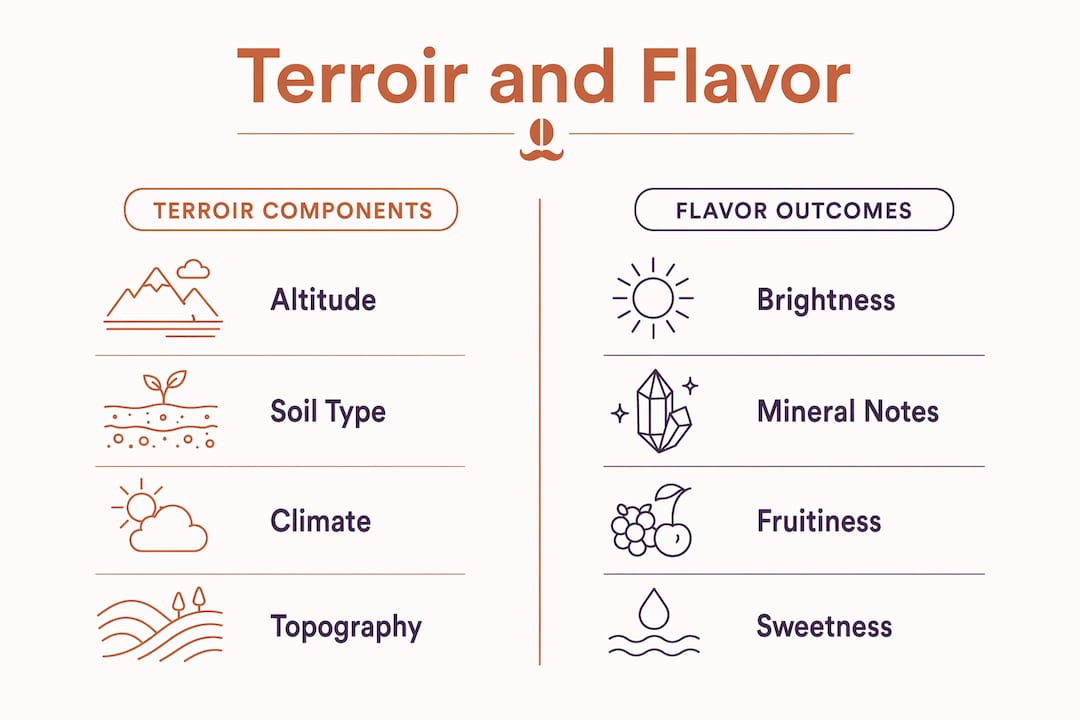
Terroir is the interaction of climate, soil, altitude, and topography, and this interaction is complex, shaping bean development long before roasting. Altitude is the most discussed factor, and for good reason. Higher elevations produce cooler temperatures, which slow bean development and allow more complex sugars and acids to accumulate. Coffees grown above 1,800 meters, like those from Ethiopia’s Sidama zone or Colombia’s Nariño department, consistently show brighter acidity and more layered fruit notes than low-altitude coffees.
Soil composition determines mineral uptake and nutrient availability. Volcanic soils in regions like Guatemala, Costa Rica, and parts of Ethiopia deliver high phosphorus and potassium levels, which support dense bean development and concentrated flavor. Rainfall patterns control how evenly beans develop on the plant. Regions with distinct wet and dry seasons, like Kenya, produce beans with more uniform ripening, which contributes to cleaner, more defined flavor profiles.
| Terroir factor | Effect on bean | Typical flavor outcome |
|---|---|---|
| High altitude (1,800+ m) | Slower development, denser bean | Bright acidity, complex fruit notes |
| Volcanic soil | High mineral content, dense structure | Concentrated flavor, long finish |
| Consistent rainfall | Uniform cherry ripening | Clean, well-defined profile |
| Equatorial climate | Year-round growing cycle | Multiple harvest layers, diversity |
| Topographic shade | Reduced UV stress on plant | Floral, delicate aromatics |
Pro Tip: When reading a coffee’s origin label, look for altitude and region together, not just country. A Colombian coffee from Huila at 1,900 meters will taste dramatically different from one grown at 1,200 meters in the lowland departments.
Terroir stereotypes are real but reductive. Not every Ethiopian coffee tastes like blueberries and jasmine. Soil variation within a single region can produce coffees that share almost no sensory overlap. Treating origin as a guarantee of a specific flavor is the most common mistake enthusiasts make.
How do processing methods interact with origin to shape flavor?
Processing is where origin flavor gets amplified or redirected. Coffee processing methods including washed, natural, honey, and anaerobic influence sweetness, acidity, body, and aroma by modifying biochemical processes during fermentation and drying. The same bean processed two different ways will produce two genuinely different cups.
Understanding how processing affects taste helps you predict what you will find in the cup before you brew. Here is how the major methods behave:
- Washed (wet) processing: The fruit is removed before drying. This method strips away fermentation variables and lets the bean’s inherent chemistry shine. Central American and East African washed coffees show clean, transparent acidity and terroir-driven clarity.
- Natural (dry) processing: The whole cherry dries around the bean for weeks. Sugars from the fruit ferment into the bean, producing heavy body, low acidity, and intense fruit flavors. Ethiopia’s Harrar naturals are the classic example, often showing wine-like, berry-forward profiles.
- Honey processing: A middle path where some fruit mucilage remains during drying. The result sits between washed clarity and natural sweetness. Costa Rica popularized this method, and its coffees show caramel sweetness with moderate acidity.
- Anaerobic fermentation: Beans ferment in sealed, oxygen-free tanks before drying. This method produces unusual, sometimes polarizing flavors including tropical fruit, fermented sweetness, and deep complexity. Colombia and Panama have led experimentation with this technique.
Processing can enhance origin flavors or mask them entirely. A natural process applied to a delicate, high-altitude Ethiopian bean can overwhelm its floral terroir notes with fermentation-driven fruit. A washed process on the same bean preserves those florals. The choice of processing method is as much an artistic decision as a technical one.
What chemical differences arise from different geographic origins?
Science now confirms what tasters have long suspected: origin produces measurable, predictable chemical differences. Trace element analysis reveals distinct regional profiles affecting antioxidant properties and flavor intensity. African beans, particularly from Ethiopia and Kenya, show higher concentrations of chlorogenic acids, which contribute to bright acidity and antioxidant activity. South American beans from Brazil and Colombia tend toward lower acidity and higher lipid content, producing the heavier body and nutty, chocolatey notes associated with those origins.
The SCA’s Coffee Taster’s Flavor Wheel contains 110 unique flavor descriptors organized into 9 broad categories, more than 30 subcategories, and over 80 outer-ring descriptors. That level of granularity exists because origin-driven chemical variation genuinely produces that many distinct sensory outcomes. The wheel is not a marketing tool. It is a map of real chemical differences.
| Origin region | Key chemical markers | Flavor descriptors |
|---|---|---|
| East Africa (Ethiopia, Kenya) | High chlorogenic acids, variable water-soluble compounds | Floral, berry, citrus, bright acidity |
| Central America (Guatemala, Costa Rica) | High mineral content from volcanic soil | Chocolate, caramel, stone fruit, clean finish |
| South America (Brazil, Colombia) | Higher lipid content, dense dry matter | Nutty, chocolate, low acidity, full body |
| Asia-Pacific (Sumatra, Papua New Guinea) | Earthy compounds, lower acidity | Earthy, cedar, tobacco, heavy body |
Innovative research now integrates analytical chemistry and machine learning to predict how specific geographic origins influence coffee’s chemical and sensory profiles. This means origin identification is moving from art to science, with predictive models that can match a bean’s chemistry to its likely sensory outcome before roasting even begins.
The SCA Flavor Wheel links descriptors to standardized references, so when a taster says “bergamot,” that term corresponds to a defined sensory standard. This precision matters because it replaces vague impressions with repeatable, communicable observations.
How does origin influence roasting and brewing decisions?
Origin is a structural variable that affects how a roaster must approach heat application. Light roasts preserve origin character while medium roasts balance complexity and body. A dense, high-altitude Ethiopian bean requires more heat energy to develop fully than a lower-density Brazilian bean. Apply the same roast profile to both, and one will be underdeveloped while the other tastes flat.
Origin-related factors help predict production challenges including bean density, heat absorption, and aging characteristics. Roasters who understand origin use this knowledge to build profiles that highlight rather than erase what the terroir created. The Scandinavian and Nordic roasting tradition, which favors ultra-light roasts, exists precisely to preserve origin flavors that darker roasting would destroy.
Brewing decisions follow the same logic. High-acidity East African coffees perform best with brewing methods that highlight clarity, like pour-over with a Hario V60 or Chemex. Heavy-bodied Sumatran coffees suit immersion methods like French press, which amplify body and mouthfeel. Matching brew method to origin is not a preference. It is a way of respecting what the terroir built.
Pro Tip: To taste origin clearly, brew the same coffee twice: once as a pour-over and once as a French press. The difference in how origin notes appear between the two methods will teach you more about origin flavor than any article can.
Freshly roasted single-origin coffees show origin character most clearly. Stale coffee loses volatile aromatic compounds first, which are the compounds most responsible for the floral, fruit, and terroir-specific notes that make origin interesting. Roast-to-order coffee preserves those compounds by minimizing the gap between roast date and brew date.
What are common misconceptions about coffee origin and flavor?
The biggest misconception is that origin alone guarantees a specific flavor. Ethiopia does not always taste like blueberries. Brazil does not always taste like chocolate. Terroir is often oversimplified, and genuine understanding requires viewing origin as a complex system, not a flavor stereotype.
Several factors beyond geography shape what ends up in your cup:
- Farming practices: Fertilizer use, shade cover, and harvest timing all affect bean quality within the same geographic origin.
- Post-harvest infrastructure: Access to clean water for washed processing, drying bed quality, and storage conditions vary enormously within a single country.
- Market incentives: Farmers who receive higher prices for quality have more reason to invest in careful sorting and selective picking, which directly improves flavor consistency.
- Roaster interpretation: Two roasters applying different profiles to the same green bean will produce two different cups, even if the origin is identical.
Flavor complexity arises from synergistic and antagonistic chemical interactions influenced by terroir, producing nuanced aroma and taste beyond simple origin stereotypes. A coffee that smells like jasmine and tastes like peach is not doing so because it came from Ethiopia. It is doing so because specific compounds produced by specific growing conditions interacted in a specific way during roasting and brewing.
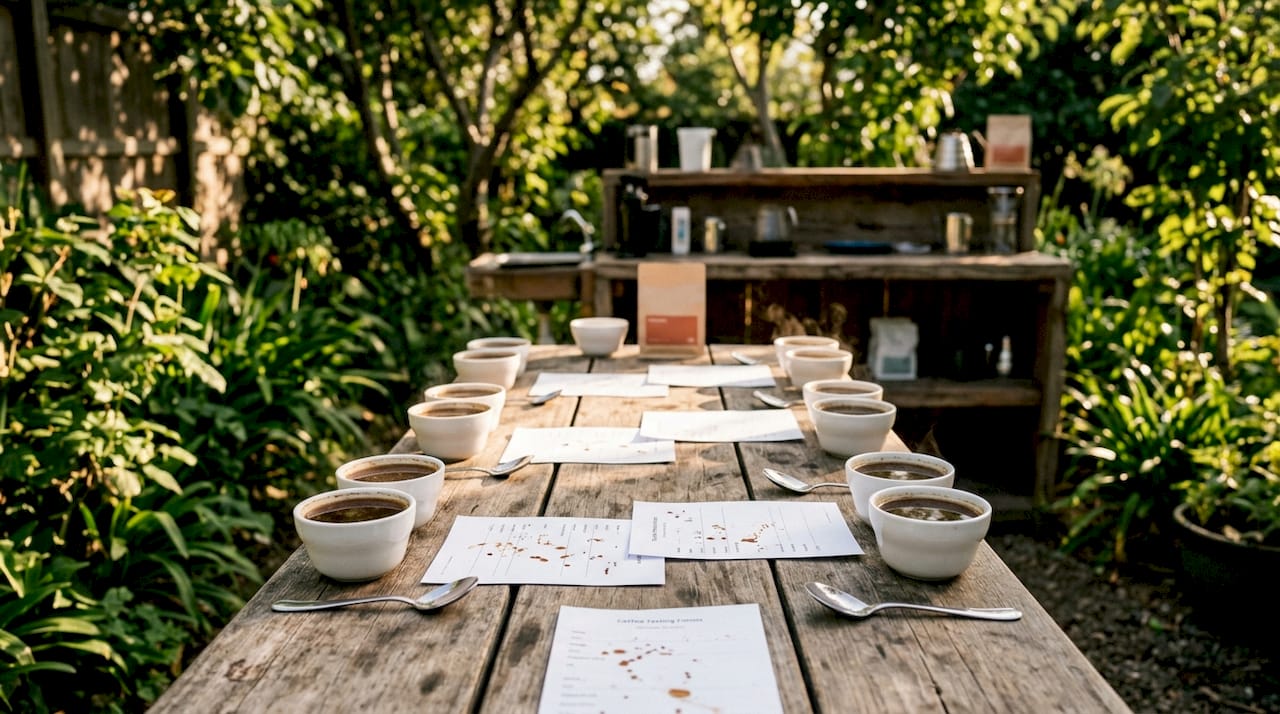
The SCA emphasizes moving away from vague terms like “good” toward precise descriptors like “jasmine” or “bergamot.” Using the SCA Flavor Wheel as a tasting framework trains you to notice what is actually in the cup rather than confirming what you expect based on origin labels. Home cupping and sensory training using reference kits and flavor wheels build the precise vocabulary needed to appreciate origin complexity without relying on stereotypes.
Key Takeaways
Coffee origin shapes flavor complexity through a chain of chemical, agricultural, and processing decisions that no single factor controls alone.
| Point | Details |
|---|---|
| Terroir drives chemistry | Altitude, soil, and climate determine the chemical compounds that create origin-specific flavor profiles. |
| Processing amplifies or masks origin | Washed methods preserve terroir clarity; natural methods add fermentation-driven sweetness that can override origin notes. |
| Light roasting preserves origin | Ultra-light roast profiles keep volatile aromatic compounds intact, showing origin character most clearly. |
| Origin stereotypes mislead | Country labels predict flavor tendencies, not guarantees; farming and infrastructure matter as much as geography. |
| Sensory training sharpens perception | Using the SCA Flavor Wheel and cupping practice builds the vocabulary to recognize and articulate origin differences. |
Origin is more than a label: what I’ve learned from tasting across regions
After tasting coffees from dozens of origins, the clearest lesson is that origin is a system, not a shortcut. The most interesting coffees I have encountered are not the ones that match their country’s reputation. They are the ones that contradict it. A Brazilian natural that tastes like red wine. A Kenyan washed coffee with unexpected savory depth. Those surprises only register if you approach each cup without a fixed expectation.
The practical value of understanding origin goes beyond flavor appreciation. It changes how you buy coffee. When you know that a Yirgacheffe’s florals come from altitude and soil rather than processing, you start asking better questions: What altitude? Which processing station? What variety? Those questions lead you to better coffees and more honest producers.
Sensory training is the tool that makes origin knowledge usable. Tasting with the SCA Flavor Wheel in hand, even informally, trains your brain to separate what you expect from what you actually perceive. That separation is where real coffee appreciation begins. Origin stories are worth reading. But the cup is always the final argument.
— Sean
Taste the difference that origin makes with Moustachecoffeeclub
Moustachecoffeeclub sources single-origin coffees from Ethiopia, Colombia, and other high-quality growing regions, roasting each batch to order in the ultra-light, Nordic style that keeps origin flavors intact.

Every subscription includes detailed origin reports that explain the terroir, processing method, and flavor profile of each coffee you receive. That context turns every brew into a tasting exercise. Enthusiasts who want to move beyond generic blends and experience how dramatically origin shapes the cup can start a single-origin subscription and taste the difference directly. The coffee education hub at Moustachecoffeeclub also offers brewing guides and origin resources to deepen your understanding with every bag.
FAQ
What does “coffee origin” mean in specialty coffee?
Coffee origin refers to the specific geographic location where coffee is grown, including country, region, and farm. Origin determines the terroir conditions that shape a bean’s chemical composition and flavor profile.
Why does Ethiopian coffee taste different from Brazilian coffee?
Ethiopian beans show higher variability in water-soluble compounds and elevated chlorogenic acids, producing bright acidity and floral or berry notes. Brazilian beans carry higher lipid content and denser dry matter, resulting in heavier body and nutty, chocolatey flavors.
Does roasting change the origin flavor of coffee?
Light roasts preserve origin character by keeping volatile aromatic compounds intact. Darker roasts mask origin-specific notes with roast-driven flavors like smoke and bitterness.
How can I learn to taste origin differences in coffee?
Home cupping with the SCA Coffee Taster’s Flavor Wheel and repeated tasting of single-origin coffees builds the sensory vocabulary needed to identify origin-specific notes. Reference kits tied to the wheel’s descriptors accelerate the learning process.
Is a coffee’s country of origin enough information to predict its flavor?
Country of origin predicts flavor tendencies but not specific outcomes. Altitude, processing method, variety, farming practices, and roast profile all modify what ends up in the cup, sometimes dramatically.
Recommended
- Why Coffee Has Fruity Tasting Notes Explained | Blog | The Moustache Coffee Club
- How Coffee Processing Affects Taste: A Flavor Guide | Blog | The Moustache Coffee Club
- How Single Origin Differs from Blends: A Coffee Guide | Blog | The Moustache Coffee Club
- How Brewing Method Affects Specialty Coffee Flavor | Blog | The Moustache Coffee Club