Roasted Same Day: Choose a Coffee Subscription for Home Baristas

Pick a subscription that gives you clear roast dates, lets you set a delivery cadence matching how much you drink, and offers whole-bean or grind-to-order choices. That combination prevents stale coffee from piling up in your pantry and keeps the whole routine simple. Services like Moustache Coffee Club build around exactly these principles, which makes them a useful reference point as you compare options.
TL;DR:
- Subscriptions must provide clear roast dates, flexible delivery cadence, and customizable grind options to ensure freshness and suit individual brewing methods.
- For espresso and filter coffee, beans should be shipped a week or two post-roast, with cold brew being more forgiving of longer freshness windows.
- Choose curated, fixed, or quiz-driven models based on your desire for discovery, stability, or ongoing personalization; review recent shipment details before subscribing.
- Verify subscription pages offer straightforward account controls, transparent shipping information, and policies for replacing or refunding stale or damaged coffee before payment.
- Prioritize services that ship on the roast day, include origin information, and offer whole beans for maximum freshness, especially if you focus on light, origin-focused roasts.
Table of Contents
- What matters most when comparing subscriptions
- How your brew method and daily consumption change what a good subscription looks like
- Subscription models: curated, fixed, and quiz-driven
- Practical checklist to inspect on a subscription page and at checkout
- How to set cadence and bag size without guessing
- Managing your first shipments and troubleshooting
- Why day-of-roast, ultra-light single-origin subscriptions stand out
- If you want the curated freshness approach, here’s where to start
- Sources
- FAQ
What matters most when comparing subscriptions
Most subscription pages bury the details that actually predict whether you will enjoy the coffee. Before you commit, scan for these signals in roughly this order of importance.
- Roast-date transparency: a printed “Roasted on” date, not a vague “freshly roasted” claim, tells you what you’re actually buying.
- Cadence flexibility: weekly, biweekly, or monthly options let you match shipments to how fast your household drinks coffee.
- Grind choice: whole bean versus grind-to-order (and which grind settings are offered) affects flavor retention.
- Personalization level: a quiz-based match versus a straight roaster’s pick changes how much discovery versus consistency you get.
- Account controls: the ability to pause, skip, or cancel without contacting support.
- Education and origin transparency: brew guides and origin reports signal a roaster that treats sourcing seriously.
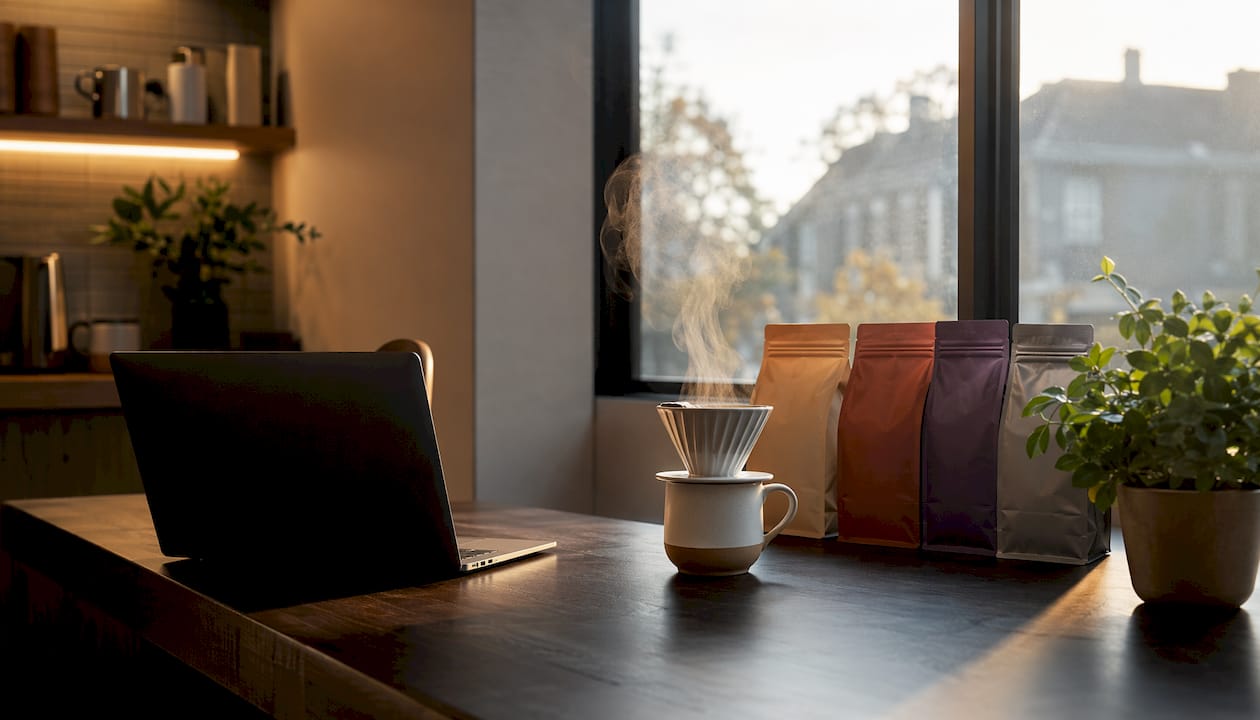
- Shipping and packaging: how fast beans move from roaster to mailbox, and whether the bag protects freshness in transit.
Pro Tip: Open a subscription’s FAQ page before you open its homepage. Marketing copy sells a feeling; the FAQ tells you what you’re actually agreeing to.
How your brew method and daily consumption change what a good subscription looks like
The right subscription depends less on the roaster’s reputation and more on how you actually make coffee at home. Espresso, filter, and cold brew all pull different things out of a bean, and they age differently once roasted.
- Espresso drinkers tend to prefer beans that have rested a week or two past roast date, since very fresh beans can produce excess crema and uneven extraction.
- Filter brewers (pour-over, drip) generally taste best within the first two to three weeks after roasting, when aromatics are at their peak.
- Cold brew is more forgiving of a slightly wider freshness window, since the long steep time smooths out some of the volatility that fades with age.
Bag size matters just as much as timing. A standard 12-ounce (340g) bag yields roughly 15 to 17 cups using typical filter-brew ratios, which gives you a rough yardstick for planning cadence without guessing.
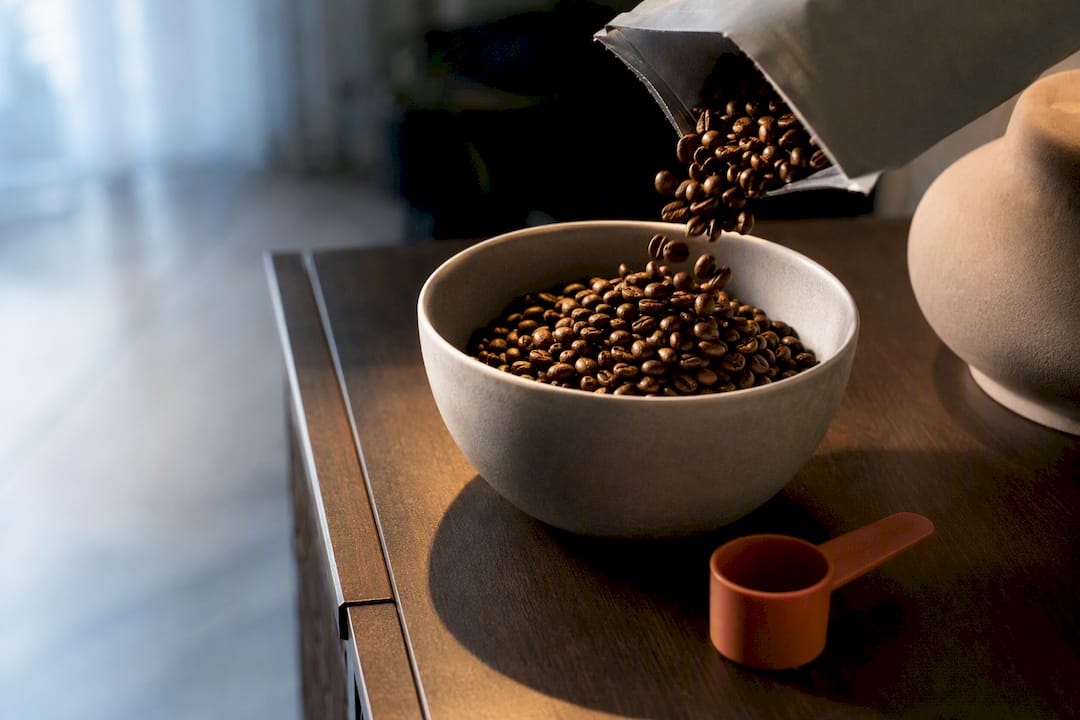
Whole beans are worth the extra step of grinding at home if you can manage it. Ground coffee loses aromatic compounds fast once exposed to air, so grinding right before brewing preserves more of what the roaster intended. If grinding at home isn’t realistic, look for a subscription that lets you specify your grind setting per shipment rather than shipping a generic pre-ground option.

Single-person households usually do better with smaller bags shipped more often, since a large bag sitting open for three weeks loses character even in decent storage. A household of three or four often does better with a larger bag or two smaller bags shipped closer together, timed around actual consumption rather than a default monthly schedule.
Subscription models: curated, fixed, and quiz-driven
Coffee subscriptions generally fall into three structural types, and each one serves a different kind of drinker.
- Roaster’s choice (curated): the roaster picks what ships each cycle, which maximizes discovery and removes decision fatigue, but works best for drinkers who are flexible about flavor profile.
- Fixed or single-roast subscriptions: you get the same bean every cycle, which suits espresso and milk-drink lovers who need a stable, repeatable flavor base.
- Personalized or quiz-driven subscriptions: an intake quiz sets your initial preferences (roast level, flavor notes, acidity tolerance), then adjusts future shipments based on your feedback, balancing a decent match with ongoing discovery.
Algorithmic matching is only as good as the feedback loop behind it. Expect the first shipment or two to be an approximation while the system calibrates to your actual taste, not a perfect match on day one. Hybrid setups also exist, where a personalized base subscription is supplemented by occasional curated or limited-edition drops, which works well for drinkers who want a reliable daily bean plus occasional variety.
Practical checklist to inspect on a subscription page and at checkout
Before you enter a credit card number, run through this checklist directly on the subscription page.
- Confirm the page states a “Roasted on” date or roast-to-ship timeframe; if it’s absent entirely, treat the freshness claim with skepticism.
- Check that you can pause, skip, or cancel from your own account dashboard rather than needing to email or call support.
- Verify grind options are listed, and confirm whether you can change grind settings shipment to shipment.
- Look for a shipment history or sample list showing what’s actually been sent to subscribers recently.
- Note the gap between roast date and ship date; a day or two is normal, a week or more undercuts any “fresh roasted” claim.
- Check packaging for a one-way degassing valve and a stated shelf-life guidance window, typically two to three weeks for peak flavor.
- Read trial or prepaid terms carefully for automatic plan conversions or negative-option billing that renews without a clear opt-in.
- Confirm there’s a stated policy for refunding or replacing coffee that arrives damaged or noticeably stale.
Reviewers consistently flag roast-date printing and roast-to-order shipping as the top predictors of subscriber satisfaction, according to testing coverage from Bon Appétit, which makes it the single most useful filter when a page’s marketing language is vague.
On the cancellation front, FTC guidance on negative-option offers requires sellers to disclose material subscription terms clearly and provide a straightforward way to cancel, so a subscription that hides its cancel button behind a support ticket is cutting against that standard even where it isn’t strictly illegal.

How to set cadence and bag size without guessing
Matching delivery frequency to actual drinking habits is mostly arithmetic once you know your daily cup count.
- Estimate your daily cups, then multiply by the number of days between shipments to get total cups needed per cycle.
- Divide that number by the 15 to 17 cups a standard 12-ounce bag yields to see how many bags you need per cycle.
- For one cup a day, a single 12-ounce bag roughly covers two weeks; for two cups a day, plan on a biweekly shipment of one bag or a monthly shipment of two.
- A household of three drinking six cups a day will burn through a 12-ounce bag in about two to three days, which usually calls for a weekly multi-bag shipment rather than a monthly single bag.
- After your first one or two shipments, adjust cadence up or down based on whether beans are running out early or piling up unused.
Treat your first month as a calibration period. It’s normal to overshoot or undershoot cadence slightly before settling on the right rhythm.
Managing your first shipments and troubleshooting
When your first bag arrives, write down the roast date somewhere you’ll actually see it, a sticky note on the bag works fine, and use it to plan your drinking window based on your brew method: earlier for filter, a little later for espresso.
- Store beans in an airtight container in a cool, dark spot, not the freezer, since repeated temperature swings introduce moisture that dulls flavor.
- If a bag arrives stale, under-roasted, or clearly past its stated window, request a swap or replacement rather than working through it.
- Document any issue with a photo of the roast date and packaging before contacting support, since that speeds up resolution.
- Expect a responsive subscription service to acknowledge freshness or damage complaints within a business day or two.
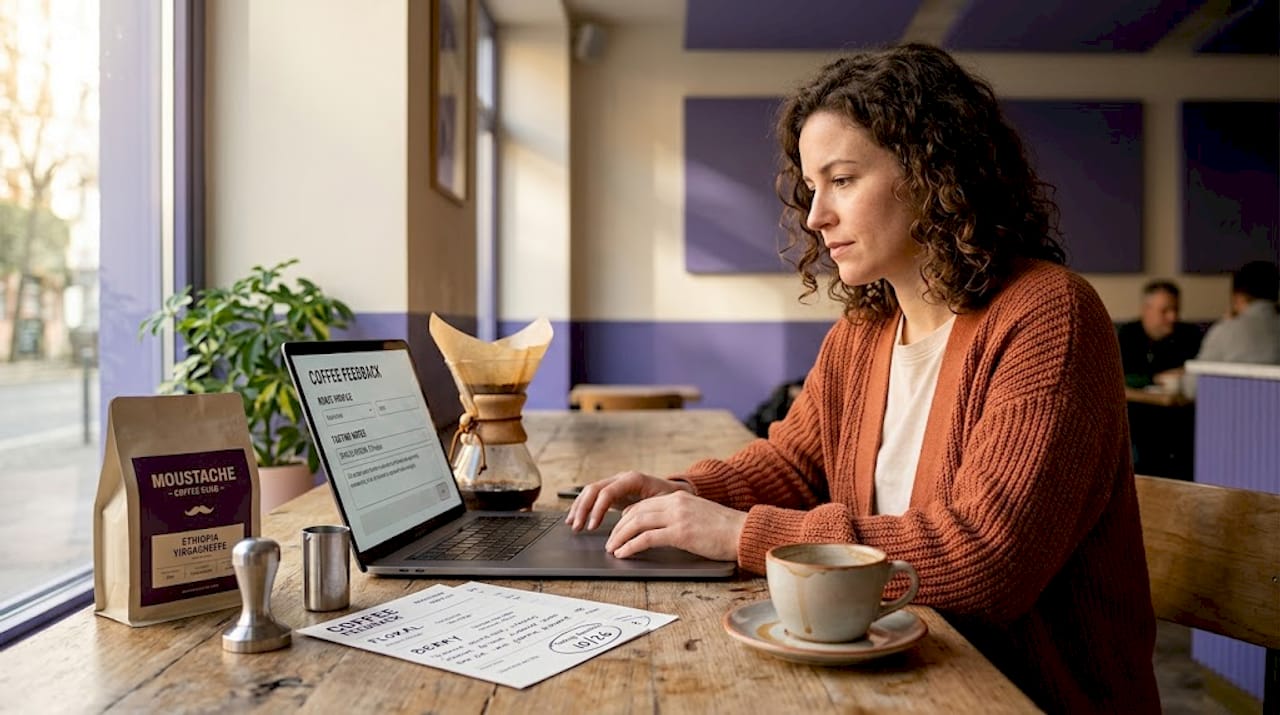
Pro Tip: Keep a simple running note of which origins and roast levels you liked best. It makes future personalization quizzes far more useful.
Why day-of-roast, ultra-light single-origin subscriptions stand out
Ultra-light, Nordic-style roasting is built around restraint. Roasting stops earlier than a conventional medium or dark roast, which keeps more of a bean’s original acidity, floral notes, and origin character intact rather than masking them under roast-driven bitterness and smoke. That approach only works if the coffee reaches the drinker while it’s genuinely fresh, since a light roast that sits too long loses the delicate notes it was roasted to preserve.
That’s the reasoning behind favoring subscriptions that ship the same day they roast, print clear roast dates, and pair every bag with origin information rather than a generic tasting note. It rewards drinkers who care where a coffee came from, not just how it tastes in the abstract.
Freshness isn’t a marketing detail. It’s the difference between tasting a coffee’s origin and tasting whatever the roast did to hide it.
— Sean
If you want the curated freshness approach, here’s where to start
Home baristas who care about origin transparency and peak freshness get the most out of a subscription built specifically around those priorities. Moustache Coffee Club’s subscription model maps directly onto the checklist covered above.
- Coffee ships the day it’s roasted, so the “Roasted on” date on the bag reflects an actual freshness window, not a marketing phrase.
- Grind options are available for different brew methods, and whole-bean is on offer for anyone grinding at home.
- Pause, skip, and cancel controls live in your account, without a support ticket in the way.
- Brew guides and origin reports come with each shipment, so you’re learning about the bean, not just drinking it.
Plans range from options like Duet at $24 per week per bag up through larger formats such as Orchestra, and gift subscriptions are available through the gift page for anyone buying for someone else. Start by browsing available plans and picking a cadence that matches your daily cup count.
Sources
For readers who want to dig into the regulatory and testing details behind these recommendations, a few sources are worth bookmarking: the FTC’s negative-option guidance on subscription disclosures, America’s Test Kitchen’s testing coverage of subscription models, and freshness-workflow context from Wild Foodz’s fulfillment writeup.
- Federal Trade Commission — Negative option rule (historical guidance)
- Bon Appétit — Best coffee subscriptions (review)
- Serious Eats — Best coffee subscriptions, testing notes
FAQ
Which coffee subscription is considered the best?
There’s no single best subscription for every drinker, since the right pick depends on your brew method, taste preferences, and how much you drink. Reviewers tend to favor services that print clear roast dates and ship close to roast day, a standard Moustache Coffee Club is built around for readers who prioritize freshness and origin transparency.
Is it worth getting a coffee subscription?
For regular coffee drinkers, a subscription is often worth it because it removes the guesswork of buying stale grocery-store bags and replaces it with a predictable, fresher supply. It’s most worthwhile when you actually drink enough coffee to use each shipment before it ages past its ideal window.
What is the 15-15-15 coffee rule?
Definitions of this rule vary across coffee communities, and there isn’t one authoritative version tied to a named standards body. A common version ties brewing ratios or timing to the number 15, but readers should treat any specific claim about it with caution until they confirm it against a source they trust.
Which coffee subscription is better, Atlas or Trade?
This article focuses on how to evaluate any coffee subscription rather than ranking specific competing brands against each other. The checklist covered above, roast-date transparency, cadence flexibility, grind options, and easy account controls, applies whichever specific services you’re comparing.