Exploring Ethiopian Coffee Varieties: A Flavor Guide
Ethiopia is the birthplace of coffee and the world’s most genetically diverse coffee origin, producing thousands of indigenous varietals that no other country can replicate. Exploring Ethiopian coffee varieties means stepping into a world where a single cup can taste like jasmine tea, ripe blueberries, or fresh lemon curd, depending entirely on where the beans grew and how they were processed. The SCA Coffee Taster’s Flavor Wheel gives professionals a shared vocabulary for these flavors, organizing them into 9 broad categories with over 80 specific descriptors. For coffee lovers ready to go deeper than “smooth” or “bold,” Ethiopian coffee is the most rewarding place to start.
Exploring Ethiopian coffee varieties: what makes them unique?
Ethiopia hosts thousands of indigenous coffee varietals, making it a genetic reservoir that no other coffee-producing country comes close to matching. Most major coffee nations grow just a handful of cultivars. Ethiopia grows hundreds of wild and semi-wild types, many still uncatalogued. That genetic depth is the direct reason Ethiopian coffees taste so dramatically different from one another.
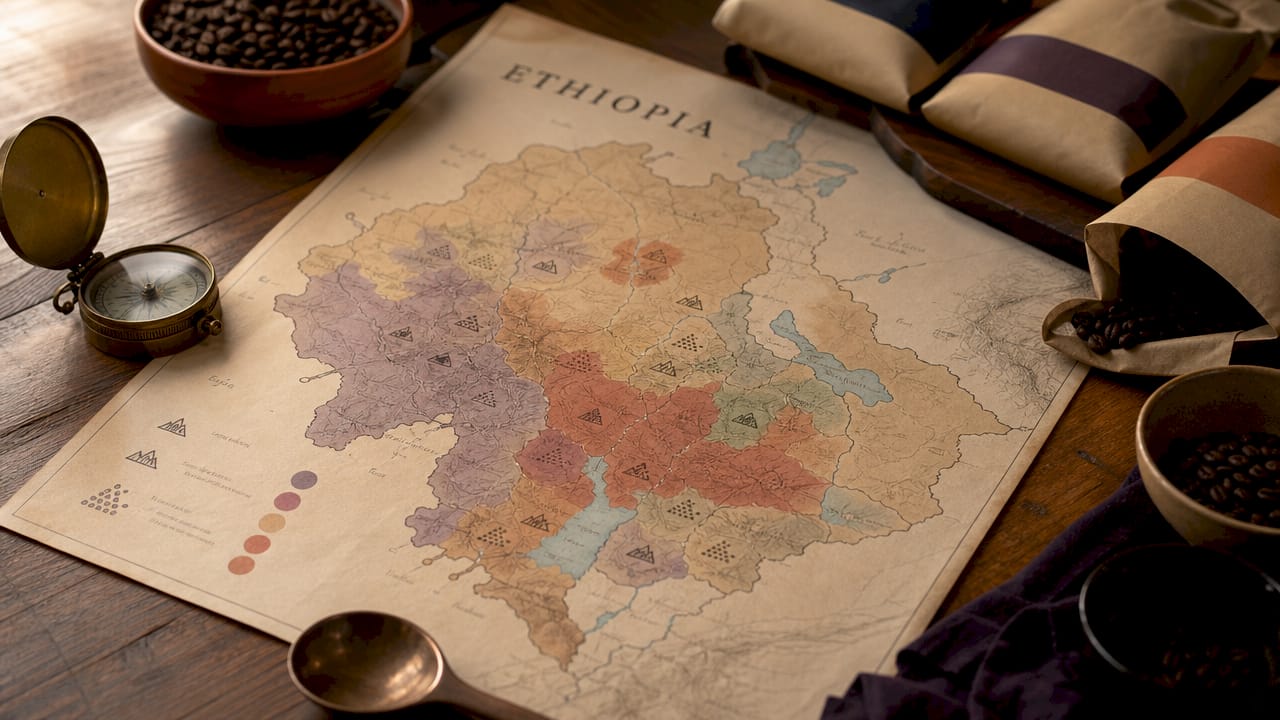
The environment amplifies this diversity. Ethiopia’s coffee grows across a wide range of altitudes, soil types, and microclimates. High-altitude farms in Yirgacheffe produce slow-ripening cherries with concentrated sugars and acids. Lowland farms in Harrar yield a completely different chemical profile. The result is a country where two coffees sharing the same national origin can taste like they came from different continents.
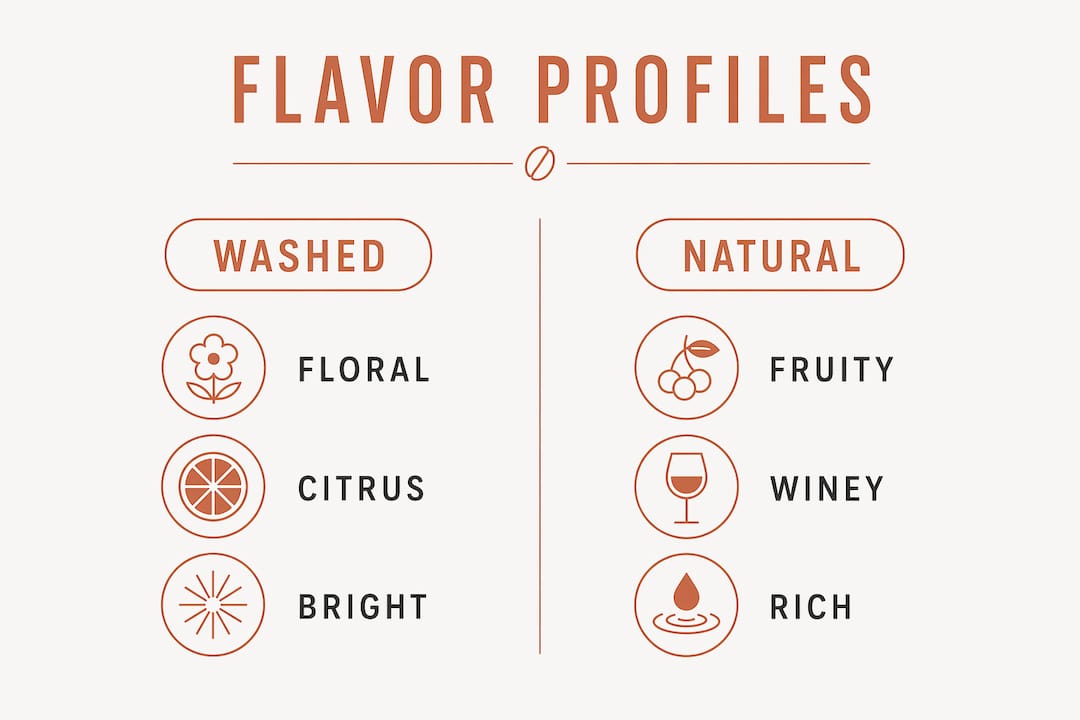
Processing method adds another layer. Washed coffees are cleaner and brighter, while natural processed coffees showcase more fruit-forward, intense flavors. That single decision, made at the farm or washing station, shapes the cup as much as the varietal itself.
How are Ethiopian coffee flavor profiles described?
The SCA Flavor Wheel, updated in 2016, is the standard tool professionals use to describe coffee flavors. It organizes taste and aroma into 9 broad categories: floral, fruity, sour/fermented, green/vegetative, other, roasted, spices, nutty/cocoa, and sweet. Ethiopian coffees regularly appear in the floral, fruity, and sour/fermented categories more than coffees from any other origin.
Common flavor descriptors you will see on Ethiopian coffee packaging include:
- Floral: Jasmine, rose, chamomile (most common in Yirgacheffe washed coffees)
- Fruity: Blueberry, strawberry, peach, dried apricot (especially in natural-processed Harrar and Guji)
- Citrus: Lemon, bergamot, lime (typical in high-altitude washed coffees)
- Winey: Fermented fruit, grape, port (a signature of dry-processed Harrar)
- Spice: Cardamom, cinnamon (occasional notes in Limu and Kaffa coffees)
These descriptors are not additives or flavorings. Flavor notes are naturally occurring chemical compounds, specifically esters and volatile aromatic compounds, that share molecular similarities with the referenced foods. When a roaster writes “blueberry,” they are pointing to a real chemical overlap, not a marketing invention.
Sensory professionals use standardized cupping protocols to identify these notes with high consensus. Home tasting varies widely because brewing method, water temperature, and individual palate sensitivity all shift what you perceive. The sensory tools professionals use to communicate flavor are built on years of calibrated practice.
Pro Tip: Treat flavor notes on a bag as a directional signal, not a checklist. If a coffee is labeled “jasmine and lemon,” look for brightness and delicacy rather than hunting for those exact tastes.
What are the best Ethiopian coffee regions and how do they differ?
Ethiopia’s coffee-growing regions each produce a recognizably distinct cup. The table below summarizes the six most prominent regions, their processing styles, and their characteristic flavor profiles.
| Region | Altitude | Processing | Flavor Profile |
|---|---|---|---|
| Yirgacheffe | High | Washed | Floral, citrus, tea-like body |
| Sidama | High | Washed or natural | Stone fruit, berry, bright acidity |
| Guji | High | Washed or natural | Peach, tropical fruit, floral |
| Harrar | Mid to high | Natural (dry) | Blueberry, winey, heavy body |
| Limu | Mid | Washed | Spice, citrus, balanced body |
| Kaffa/Djimma | Mid | Natural or washed | Earthy, chocolate, mild acidity |
Yirgacheffe coffees have bright floral aromatics, citrus acidity, and a delicate tea-like body. That profile comes directly from the region’s high altitude and rich volcanic soil, which slow cherry development and concentrate flavor compounds. Yirgacheffe is the region most coffee professionals point to when explaining why Ethiopian coffee is special.
Harrar sits at the other end of the spectrum. Harrar coffees are known for winey, blueberry, and fermented fruit notes, a result of dry processing where the cherry dries around the bean for weeks. That extended contact transfers intense fruit sugars and fermentation byproducts directly into the cup. Harrar produces one of the most distinctive cups in the world, and it polarizes drinkers in the best possible way.
Guji has emerged as a standout region in recent years. Coffees from Guji often show peach, tropical fruit, and floral notes, with a clarity that rivals Yirgacheffe. Sidama, neighboring Yirgacheffe, produces coffees with more body and stone fruit character. Limu and Kaffa/Djimma coffees tend toward earthier, more balanced profiles that appeal to drinkers who find Yirgacheffe too delicate.
Pro Tip: If you are new to Ethiopian coffee, start with a washed Yirgacheffe. Its clean, floral profile is the clearest introduction to what makes Ethiopian coffee unlike anything else.
What distinguishes Ethiopian heirloom varieties from named varietals?
The word “heirloom” on an Ethiopian coffee bag is not a single variety. Most Ethiopian coffees labeled as heirloom actually encompass thousands of unnamed landraces rather than one specific plant. This is not a flaw in labeling. It reflects the genuine reality that Ethiopia’s coffee forests contain genetic complexity that has never been fully catalogued.
Named varietals offer something different: traceability and consistency. The Jimma Agricultural Research Center (JARC) began cataloging Ethiopian varietals in the 1970s, assigning codes to selected landraces with superior traits. The most significant JARC selections are:
- 74110: Selected for disease resistance and good cup quality. Widely planted across Ethiopia’s coffee regions and valued for reliability.
- 74112: Prized for exceptional cup complexity. Produces coffees with pronounced floral and fruit notes. Considered one of the finest JARC selections for specialty coffee.
- Ethiopian Gesha: Originated from indigenous landrace collections in Ethiopia. Ethiopian-grown Gesha tastes earthier and less perfumed than Panama Gesha but retains notable complexity. It illustrates how much untapped potential still exists in Ethiopian forests.
The practical difference for coffee buyers is this: a bag labeled “heirloom” could contain any mix of hundreds of landraces, while a bag labeled “74112” or “JARC selection” signals that a specific plant with documented flavor traits was grown and tracked. Neither is inferior. Heirloom coffees can be extraordinary. Named varietals simply give you a clearer map.
Understanding this distinction helps you read specialty coffee labels with more confidence. When a roaster specifies a JARC varietal, they are telling you that traceability mattered at every step of production.
How to select, taste, and appreciate Ethiopian coffee at home
Buying Ethiopian coffee well starts with three pieces of information on the bag: region, processing method, and roast level. Region tells you the flavor direction. Processing tells you the intensity. Roast level tells you how much of the original character survived the roaster’s decisions.
When selecting Ethiopian coffee, look for:
- Region specificity: “Yirgacheffe” or “Guji” is more informative than just “Ethiopia.”
- Processing method: Washed for clarity and brightness; natural for fruit intensity and body.
- Roast level: Light to medium roast preserves the delicate floral and fruit notes that define Ethiopian coffees. Dark roasts push those notes out and replace them with roast character.
- Roast date: Freshness matters. Specialty Ethiopian coffees are best within four to eight weeks of roasting.
For brewing, pour-over methods like the V60 or Chemex work exceptionally well with washed Ethiopian coffees. They preserve clarity and let floral and citrus notes come through cleanly. Natural-processed coffees from Harrar or Guji can handle a French press or AeroPress, where the heavier body and fruit intensity benefit from full immersion. Brewing method directly affects how much of a coffee’s flavor profile you actually taste in the cup.
Tasting technique matters too. Slurp the coffee across your palate to aerate it, the same way a professional cupper does. Notice acidity first, then body, then the flavors that linger after you swallow. Tasting notes are directional signals, not guarantees. If you taste something bright and fruity but cannot name it, that is still a successful tasting experience.
Pro Tip: Try the same Ethiopian region in both washed and natural versions side by side. The contrast will teach you more about processing than any description can.
Key takeaways
Ethiopian coffee is the world’s most genetically diverse origin, and understanding its regions, varietals, and processing methods is the most direct path to appreciating its full flavor range.
| Point | Details |
|---|---|
| Ethiopia’s genetic diversity | Thousands of indigenous varietals produce flavor complexity no other origin matches. |
| SCA Flavor Wheel | Use its 9 categories to interpret tasting notes on Ethiopian coffee packaging. |
| Region shapes flavor | Yirgacheffe delivers floral and citrus; Harrar delivers winey, fruit-forward intensity. |
| Heirloom vs named varietals | Named JARC selections like 74112 offer traceability; heirloom covers thousands of undocumented landraces. |
| Brewing for best results | Light roast and pour-over methods preserve the delicate notes that define Ethiopian coffees. |
Why Ethiopian coffee keeps surprising me
I have tasted coffees from dozens of origins over the years, and Ethiopian coffee is the one that still catches me off guard. A washed Yirgacheffe brewed at the right temperature can smell like a cup of chamomile tea before you even take a sip. That is not a marketing claim. It is a chemical reality, and it never stops being remarkable.
The thing most coffee lovers miss is how much the “heirloom” label hides. When you drink a bag labeled simply “Ethiopian heirloom,” you are drinking something from a genetic pool so wide that two bags from the same region can taste completely different. That is not a quality problem. It is actually the most exciting thing about Ethiopian coffee. You are tasting biological diversity in real time.
My honest advice: do not get too attached to the flavor notes on the bag. I have had Yirgacheffes labeled “jasmine and bergamot” that tasted more like peach to me. That does not mean the roaster was wrong. It means my palate, my water, and my brewing setup created a slightly different result. Fruity tasting notes in coffee come from real chemical compounds, but how you perceive them is personal.
The best approach is to stay curious. Try a natural Harrar if you have only had washed Yirgacheffe. Try a JARC 74112 if you have only seen heirloom labels. Ethiopia has more to offer than most coffee drinkers ever get around to tasting.
— Sean
Ethiopian coffee from Moustachecoffeeclub
Moustachecoffeeclub sources single-origin Ethiopian coffees roasted in the ultra-light, Nordic-inspired tradition that keeps floral and fruit notes intact. Each selection comes with detailed origin notes covering region, processing method, and varietal where available, so you know exactly what you are buying.

The coffee education hub covers brewing guides, flavor profile explanations, and origin reports that go well beyond the basics. If you want to put what you have read here into practice with freshly roasted Ethiopian beans, the Moustachecoffeeclub subscription delivers curated single-origin coffees roasted to order, straight to your door. It is the most direct way to taste the range of what Ethiopian coffee can do.
FAQ
What makes Ethiopian coffee different from other origins?
Ethiopia is coffee’s genetic homeland and hosts thousands of indigenous varietals found nowhere else. That genetic diversity produces flavor complexity, from floral and citrus to winey and fruity, that other origins cannot replicate.
What does “heirloom” mean on an Ethiopian coffee bag?
“Heirloom” is an umbrella label for thousands of genetically distinct, mostly undocumented Ethiopian landraces. It does not refer to a single variety, which is why two heirloom coffees from the same region can taste very different.
Which Ethiopian region produces the most floral coffee?
Yirgacheffe consistently produces the most floral Ethiopian coffees, with jasmine, chamomile, and citrus notes driven by high altitude, rich soil, and washed processing.
How should I brew Ethiopian coffee at home?
Light to medium roast Ethiopian coffees perform best with pour-over methods like the V60 or Chemex, which preserve delicate floral and citrus notes. Natural-processed coffees from Harrar or Guji also work well in a French press.
Are the flavor notes on Ethiopian coffee bags accurate?
Flavor notes reflect real chemical compounds in the coffee, but your perception depends on brewing method, water quality, and personal palate. Treat them as a guide to the coffee’s general character rather than a precise prediction.
Recommended
- Colombian Coffee Varieties List: 2026 Definitive Guide | Blog | The Moustache Coffee Club
- How Coffee Processing Affects Taste: A Flavor Guide | Blog | The Moustache Coffee Club
- How to buy specialty coffee: expert tips for flavor and quality | Blog | The Moustache Coffee Club
- Why Coffee Origin Impacts Flavor Complexity | Blog | The Moustache Coffee Club