Coffee Accessories Gifting Guide: Matched to Every Brewer
A coffee accessories gifting guide is most effective when the gift matches the recipient’s brewing method and experience level, not just their love of coffee. The best coffee gifts fall into three categories: precision tools like burr grinders and digital scales, freshness accessories like airtight canisters and degassing valve bags, and experiential items like single-origin discovery kits and stylish mugs. Matching gifts to how someone brews removes the guesswork and guarantees the item gets used. This guide covers all three categories with specific recommendations, price context, and the kind of insider detail that separates a memorable gift from a forgettable one.
1. How to choose coffee accessories for different brewing methods
The single biggest mistake in coffee gifting is buying something generic when the recipient has a specific setup at home. A gooseneck kettle is a dream gift for a pour-over devotee but completely irrelevant to someone who only pulls espresso shots.
Start by identifying how your recipient brews. The main methods each require distinct accessories:
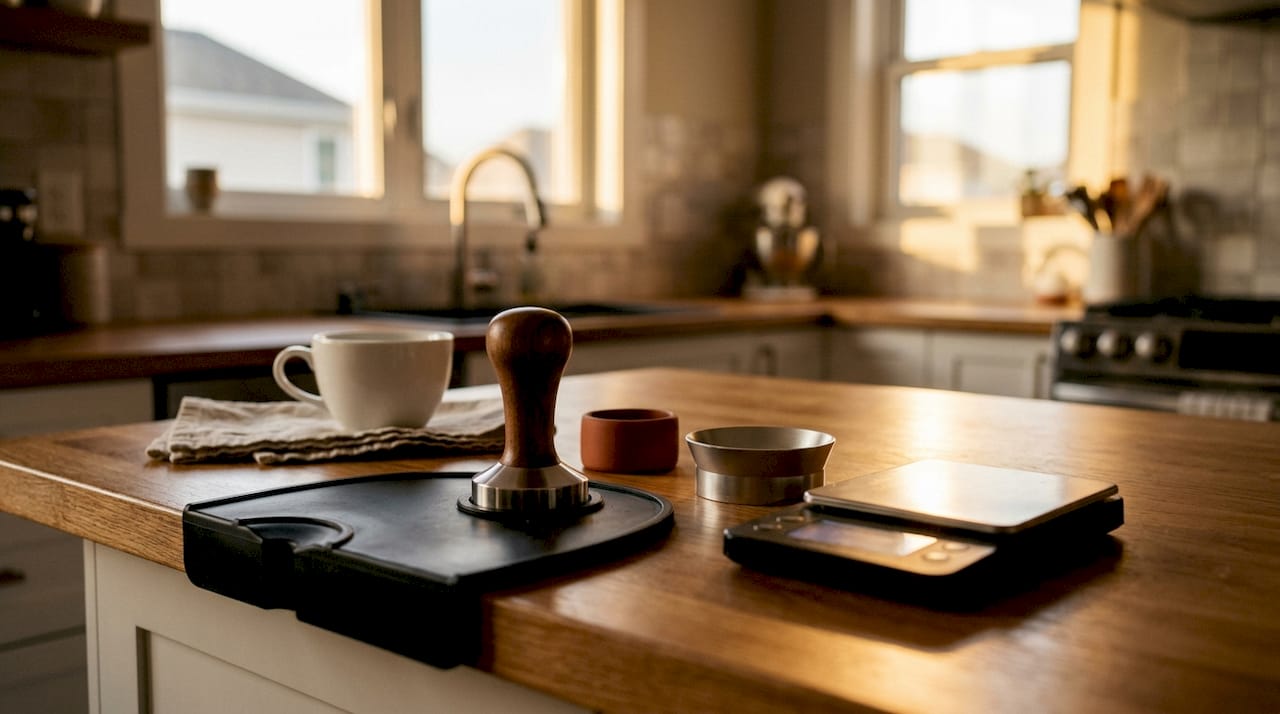
- Espresso: WDT tools, precision tampers, bottomless portafilters, and shot glasses with volume markings
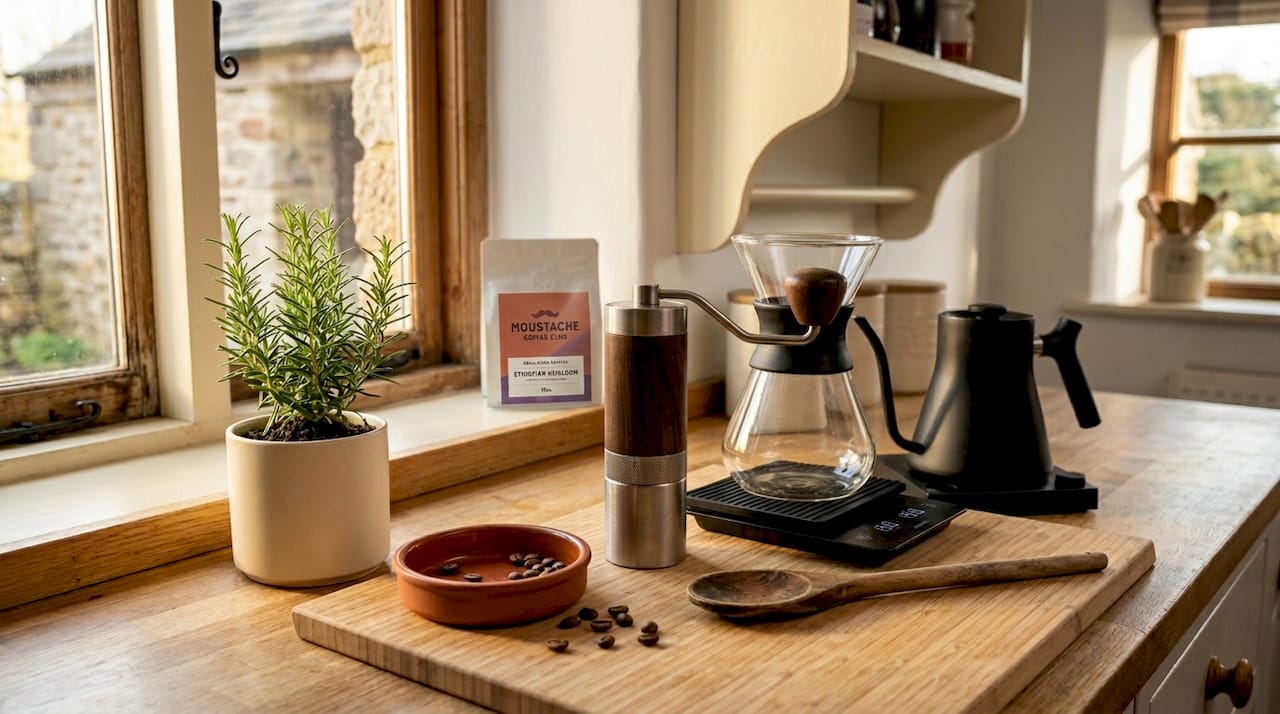
- Pour-over (Hario V60, Chemex, Kalita Wave): Gooseneck kettles with variable temperature control, paper or metal filters, and brew ratio scales
- French press: Coarse burr grinders, insulated carafes, and brew timers
- AeroPress: Travel-friendly accessories, metal filters, and compact scales
- Moka pot: Induction-compatible bases and heat-resistant silicone handles
Beginner brewers benefit most from a single quality upgrade, like a hand grinder or a basic scale. Advanced brewers appreciate tools that reduce variables, such as a WDT needle set or a refractometer for measuring extraction yield.
Pro Tip: For someone in a small apartment or who travels frequently, compact gear scores highest. The Timemore Chestnut C2 hand grinder and a pocket-sized Acaia Lunar scale both fit in a carry-on and cover two of the most impactful brewing variables.
2. Precision tools that serious coffee lovers actually want
Precision is the ultimate gift for a serious coffee drinker, because it directly improves what ends up in the cup. SCA-certified brewers consistently point to burr grinders and digital scales as the two foundational tools for dialing in coffee ratios accurately.
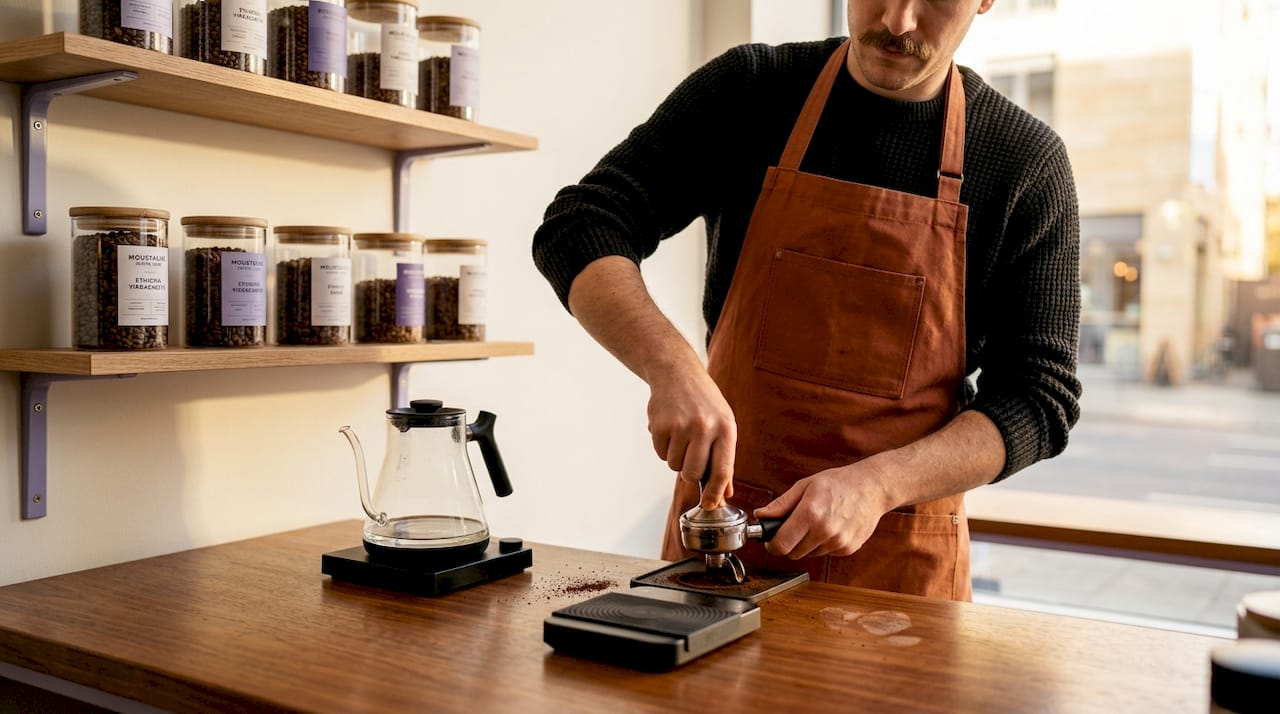
Entry-level burr grinders in the $60 to $80 range, such as the Baratza Encore or Timemore Slim Plus, produce far more consistent particle sizes than blade grinders. Consistent grind size means more even extraction and a noticeably better cup. A digital scale with 0.1g precision eliminates the guesswork of scooping by volume, which varies wildly depending on roast level and bean density.
For espresso drinkers specifically, a WDT (Weiss Distribution Technique) tool addresses one of the most overlooked variables in home espresso. WDT reduces channeling by evening out coffee puck density before tamping. Without it, extraction variance runs around plus or minus 5 seconds per shot. With it, that variance drops to roughly plus or minus 1.5 seconds. That is a meaningful difference in cup consistency.
Variable temperature kettles, such as the Fellow Stagg EKG, pair naturally with pour-over and Chemex setups. The SCA water standard recommends brewing at 92 to 96 degrees Celsius, a range that most standard kettles cannot hit reliably without a thermometer.
Pro Tip: A DIY WDT tool made from a wine cork and 0.3 to 0.4mm needles costs under $5 and performs comparably to commercial versions in the $30 to $50 range. It makes a clever, low-cost addition to any espresso gift bundle.
| Gift Item | Price Range | Best For | Skill Level |
|---|---|---|---|
| Burr grinder (Baratza Encore) | $60–$80 | All brew methods | Beginner to intermediate |
| Digital scale (0.1g precision) | $25–$50 | Pour-over, espresso | All levels |
| Variable temp kettle (Fellow Stagg EKG) | $80–$165 | Pour-over, Chemex | Intermediate to advanced |
| WDT tool | $15–$50 | Espresso | Intermediate to advanced |
3. Coffee freshness and storage accessories worth gifting
Freshness is where most home coffee setups fail quietly. Roasted coffee begins losing its best flavors within days of opening, and the packaging it came in rarely helps.
Research on specialty coffee shelf life shows that packaging type dramatically affects how long coffee stays fresh. A triple-laminated bag with a degassing valve extends shelf life to roughly 12 days under accelerated testing conditions, while standard airtight containers without valves perform significantly worse. The reason is CO2 release. Freshly roasted beans off-gas carbon dioxide for days after roasting, and without a one-way valve, that gas either escapes and takes aromatics with it or builds pressure that forces oxygen back in when opened.
Airtight canisters like the Airscape or Fellow Atmos are popular gifts because they look good on a counter and genuinely work. The Fellow Atmos uses a vacuum pump lid to remove oxygen from the container entirely, which is a step beyond standard airtight seals. For buyers who want to go further, a small vacuum sealer paired with resealable bags lets the recipient portion and seal beans in weekly batches.
Storage best practices matter as much as the container. Coffee stored away from light, heat, and moisture retains flavor far longer than coffee sitting on a sunny counter in a glass jar. A quality opaque canister solves all three problems at once.
Pro Tip: Avoid gifting a refrigerator or freezer storage solution unless the recipient is storing large quantities of green (unroasted) beans. For roasted coffee, temperature cycling from fridge to room temperature introduces moisture condensation that accelerates staling faster than room-temperature storage.
| Packaging Type | Freshness Duration | Key Feature |
|---|---|---|
| Triple-laminated bag with degassing valve | ~12 days (accelerated) | Manages CO2 release |
| Vacuum canister (Fellow Atmos) | Extended vs. standard seal | Removes oxygen actively |
| Standard airtight canister (Airscape) | Better than open bag | Pressure-fit lid |
| Plain glass jar | Shortest | No gas management |
4. Unique and artisanal coffee gifts that go beyond gear
Not every great coffee gift is a piece of equipment. Some of the most appreciated gifts connect the recipient to coffee culture rather than just improving their technique.
Artisanal coffee gifts feel personal because they reflect the giver’s attention to the recipient’s taste, not just a generic “coffee lover” label. A curated selection of single-origin coffees from Ethiopia, Colombia, and Kenya tells a story about flavor and origin that a bag of grocery-store blend never could. Pairing those beans with a handwritten tasting note or a printed origin report adds a layer of thoughtfulness that elevates the whole package.
Here are gift ideas that blend function with personality:
- Specialty coffee discovery kits: Curated sets of three to five single-origin coffees from different regions, ideal for recipients who enjoy exploring flavor profiles
- Stylish ceramic mugs: Handmade mugs from potters on Etsy or from specialty ceramics brands like Jono Pandolfi add a tactile, personal dimension to daily coffee rituals
- Brewing guides and coffee books: The World Atlas of Coffee by James Hoffmann is the most gifted coffee book for a reason. It covers origins, processing methods, and brewing in a way that is genuinely readable
- Engraved or personalized tools: A tamper or portafilter handle with the recipient’s name or a meaningful date turns a functional item into a keepsake
- Coffee tasting experience: A coffee tasting gift or cupping session introduces recipients to flavor vocabulary and origin nuance in a hands-on format
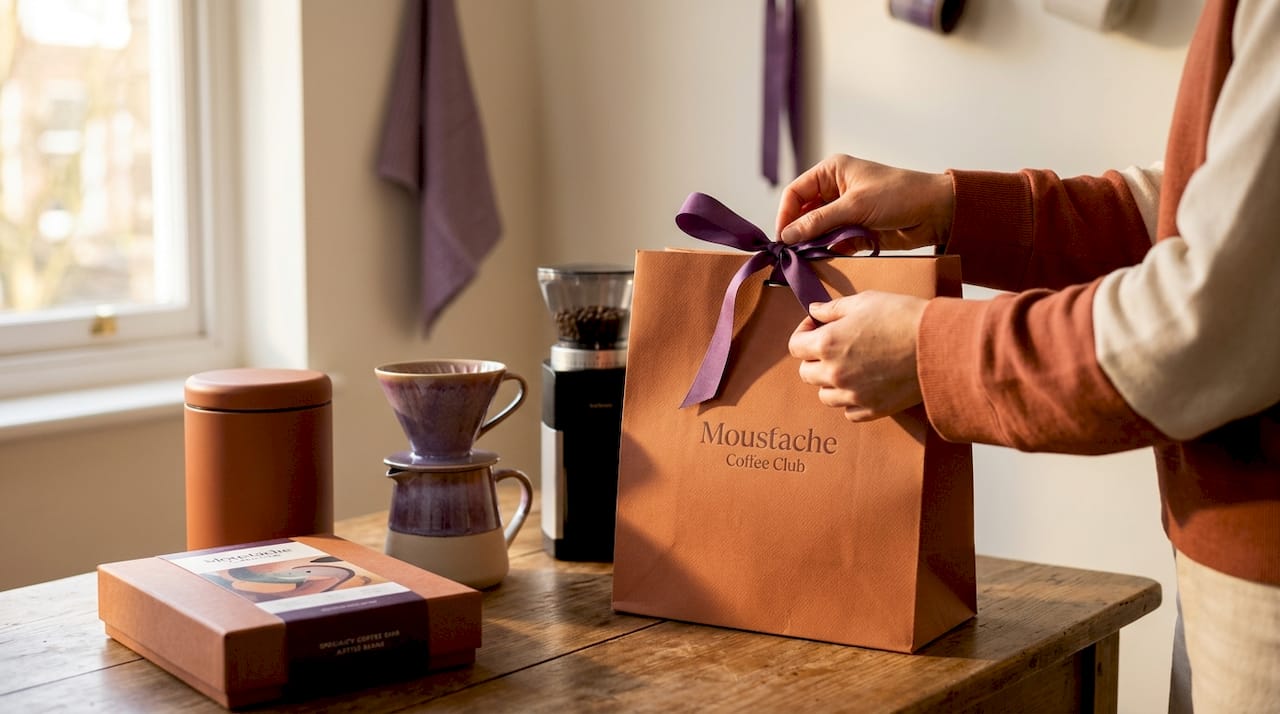
Thoughtful presentation amplifies every item on this list. A quality canister, a bag of freshly roasted single-origin beans, and a handwritten note about the coffee’s origin costs less than $60 total and lands better than a $100 gadget in generic packaging.
5. Coffee gift comparison by price, experience level, and brewing style
Choosing the right gift becomes straightforward when you match the item to three variables: budget, the recipient’s experience level, and their primary brewing method. The table below covers the most practical options across those dimensions.
| Gift Item | Budget | Brewing Method | Experience Level |
|---|---|---|---|
| Hand burr grinder (Timemore C2) | $50–$70 | All methods | Beginner |
| Digital scale with 0.1g precision | $25–$50 | Pour-over, espresso | All levels |
| Variable temp kettle | $80–$165 | Pour-over, Chemex | Intermediate |
| WDT tool | $15–$50 | Espresso | Intermediate to advanced |
| Vacuum canister (Fellow Atmos) | $40–$60 | All methods | All levels |
| Single-origin coffee discovery kit | $30–$60 | All methods | All levels |
| Coffee subscription (3 months) | $45–$90 | All methods | All levels |
| The World Atlas of Coffee | $25–$35 | N/A | Beginner to intermediate |
| Specialty ceramic mug | $20–$60 | N/A | All levels |
The best overall value gift across all budgets and experience levels is a digital scale paired with a bag of freshly roasted single-origin beans. It improves brewing immediately and introduces the recipient to specialty coffee quality in one package.
Key takeaways
The most effective coffee accessories gifting guide matches every item to the recipient’s brewing method, experience level, and storage habits, because a well-chosen tool gets used every day while a generic one collects dust.
| Point | Details |
|---|---|
| Match gift to brewing method | Espresso drinkers need WDT tools and tampers; pour-over brewers need gooseneck kettles and scales. |
| Prioritize precision tools | Burr grinders and 0.1g scales improve cup quality immediately and suit all experience levels. |
| Storage matters as much as gear | Degassing valve packaging and vacuum canisters preserve specialty coffee freshness far longer than standard containers. |
| Artisanal gifts add personal value | Single-origin discovery kits, engraved tools, and handwritten tasting notes make gifts memorable, not just useful. |
| Presentation multiplies impact | Quality wrapping and a handwritten note about the coffee’s origin turn a good gift into a great one. |
What I’ve learned from years of gifting coffee accessories
The most common mistake I see gift buyers make is defaulting to a beautiful object over a useful one. A stunning hand-thrown ceramic mug is a lovely gift. But if the recipient is pulling espresso shots on a $400 machine with a blade grinder, a $65 burr grinder will change their mornings in a way the mug never will.
My honest rule: always ask one question before buying. “What does their current setup look like?” If you can find out, even indirectly, you can identify the single weakest link in their brewing chain and gift directly to it. That approach consistently produces the most appreciated gifts I have ever given or recommended.
I also think the specialty coffee world undersells the experiential gift. A coffee discovery kit or a three-month subscription to a Nordic-style single-origin roaster gives the recipient something new every few weeks. It is an ongoing experience, not a one-time object. For someone who already has solid gear, that is often the more exciting choice.
One more thing worth saying: do not underestimate presentation. A bag of exceptional Ethiopian natural process coffee, a small Airscape canister, and a card explaining the coffee’s origin and flavor notes costs under $70 and feels genuinely considered. The Serious Eats 2026 coffee gift guide makes this same point. The packaging and context around a gift shape how it is received just as much as the item itself.
— Sean
Find the perfect coffee gift at Moustachecoffeeclub
Moustachecoffeeclub offers ultra-light, Nordic-style single-origin coffee subscriptions roasted to order from Ethiopia, Colombia, and beyond. Every subscription ships freshly roasted beans with origin reports and brewing guides, making it one of the most complete experiential gifts available for specialty coffee lovers. A gift subscription delivers a new single-origin coffee every few weeks, paired with tasting notes and the story behind each farm. For buyers who want to go deeper, the coffee education hub covers brewing methods, water parameters, and origin profiles in detail. It is the kind of gift that keeps delivering well past the first cup.
FAQ
What is the best coffee gift for a beginner?
A burr grinder in the $60 to $80 range, such as the Baratza Encore, is the single most impactful upgrade for a beginner. Pair it with a bag of freshly roasted single-origin beans for a complete, immediately useful gift.
How do I choose coffee gifts without knowing their setup?
Ask how they brew: French press, espresso, pour-over, or pods. That one answer narrows the accessory list significantly and prevents buying something incompatible with their equipment.
Does packaging really affect coffee freshness?
Yes. Research shows that degassing valve packaging extends roasted coffee shelf life significantly compared to standard airtight containers, because it manages CO2 release without allowing oxygen back in.
What makes a coffee gift feel artisanal and personal?
Single-origin beans from a specific farm or region, a handwritten tasting note, and quality presentation all contribute. Engraved tools or a curated discovery kit add a layer of personalization that generic gifts cannot replicate.
Is a coffee subscription a good gift?
A coffee subscription is one of the strongest gifting ideas for coffee enthusiasts because it delivers fresh, rotating single-origin coffees over weeks or months, giving the recipient an ongoing experience rather than a single item.
Recommended
- Why coffee gifts suit corporate gifting: a buyer’s guide | Blog | The Moustache Coffee Club
- Coffee Education Hub | Ultra-Light Nordic-Style Brewing Guides & Origins | Moustache Coffee Club
- Last-Minute Specialty Coffee Gift Guide for 2026 | Blog | The Moustache Coffee Club
- How a coffee tasting experience gift delights coffee lovers | Blog | The Moustache Coffee Club